Why More South Shore Patients Are Choosing Concierge Primary Care
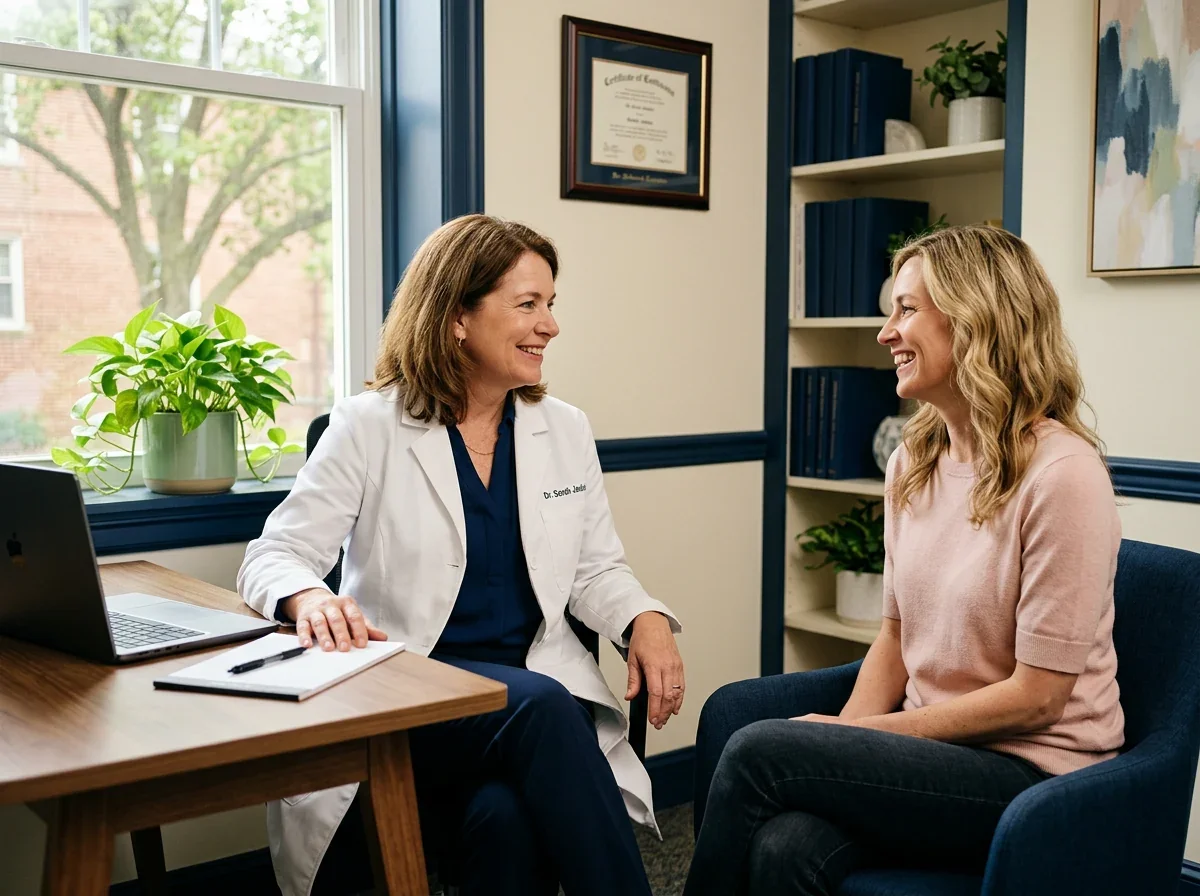
Across Massachusetts, patients are navigating waiting lists that stretch weeks, practices closed to new patients, and visits that feel more like a transaction than a conversation. More South Shore patients are deciding they do not have to accept it.
Last updated May 2026
Getting an appointment with a primary care physician in Massachusetts used to feel routine. It no longer does. Across the state, patients are navigating waiting lists that stretch weeks, practices that have closed their panels to new patients entirely, and visits that feel less like a conversation and more like a transaction. When something finally gets addressed, it is often the most pressing item on a list of concerns that never quite gets finished.
This is not a local anomaly. It reflects a structural reality in primary care that has been building for years and is now difficult to ignore. What is changing is that more patients on the South Shore are deciding they do not have to accept it.
The State of Primary Care in Massachusetts
Massachusetts ranks among the highest in the country for total physicians per capita, which can make the access problem feel paradoxical. But the breakdown matters. According to a 2025 special report by the Massachusetts Health Policy Commission, the Commonwealth has among the smallest proportions of its physician workforce working in primary care, and the number of new physicians entering the field is not keeping pace with demand. The percentage of primary care physicians who exited the field rose to 5.5 percent by 2025, the highest level recorded since measurement began.
The downstream effects are predictable. A 2023 survey by the Center for Health Information and Analysis found that 41 percent of Massachusetts residents reported difficulty accessing care. The average wait for a new patient appointment nationally sits at around 26 days. For patients in areas with shrinking primary care capacity, that number stretches considerably further.
Inside those appointments, time is its own constraint. Research published in peer-reviewed literature consistently finds that standard primary care visits average between 15 and 20 minutes. Within that window, a physician must review a chart, address whatever brought the patient in, manage existing chronic conditions, coordinate any referrals, document everything in the electronic health record, and prepare for the next patient. The math does not leave much room for the kind of conversation that would actually address the complexity of what most adults are managing.
What Patients Are Actually Looking For
When patients describe what they want from a primary care relationship, the answers are consistent across studies. The 2023 LocalIQ Healthcare Study identified priority, responsiveness, and compassion as the top emotional drivers of healthcare provider selection. What patients want is a physician who treats them as a priority, responds when they need help, and genuinely engages with their mental and physical health together, not as separate problems requiring separate specialists.
What they often encounter instead is a system in which the physician is doing their best within a structure that makes all of those things difficult. Panels of 1,500 to 2,000 patients or more mean that a physician who wants to spend 30 minutes with you simply does not have 30 minutes to give. The problem is not usually physician intent. It is the design of the model.
Concierge medicine addresses the design problem directly.
How Concierge Medicine Works Differently
The defining feature of concierge primary care is a deliberately small patient panel. Where a traditional primary care physician may carry 1,500 patients or more, a concierge practice limits enrollment to a few hundred. That structural decision changes everything downstream.
Here is what it makes possible in practice:
Same-day or next-day appointments when something comes up, rather than waiting weeks for a slot
Longer visits that allow a physician to address multiple concerns in a single appointment instead of triage-selecting one
Direct access to your physician by phone, text, or secure message, without navigating a phone tree or waiting for a callback
Continuity across appointments, because your physician already knows your history, your current medications, your recent labs, and the context behind your concerns
Proactive care coordination that connects primary care to specialists and follows up to confirm that referrals actually happen
At Concierge Medicine of South Shore, Dr. Maria Clarinda Buencamino-Francisco, known to her patients as Dr. B, built her practice around this model specifically because she wanted to provide the kind of care that the standard structure makes nearly impossible. Her practice in Hingham serves patients across the South Shore with a preventive medicine focus grounded in relationship-centered care. Appointments are not capped at 15 minutes. A phone call does not require a nurse to relay a message through three intermediaries. When a patient has a question between visits, there is a physician available to answer it.
The Case for Preventive Medicine
One of the most meaningful differences between concierge care and traditional primary care is what happens in the space between illness episodes. In a model where appointments are driven by acute needs and panel sizes are large, preventive care becomes aspirational rather than operational. It shows up on care checklists, but getting through a full preventive agenda in a 15-minute visit alongside an acute concern is rarely realistic.
A concierge model creates time for prevention to be primary, which is what the word "preventive medicine" actually means:
Comprehensive baseline health assessments that establish a clear starting point for each patient
Bone density and metabolic screenings that are discussed in the context of a patient's specific risk factors, not applied from a generic protocol
Cardiovascular risk conversations that happen before a patient has a cardiac event, not after
Hormonal health discussions across the full perimenopause and menopause transition, not addressed only when symptoms become severe enough to demand attention
Mental and physical health addressed together, because they are not separable
Dr. B holds the Menopause Society Certified Practitioner (MSCP) designation—a credential that is not incidental. It reflects a clinical commitment to the areas of health that most affect women in midlife and beyond and that most standard primary care practices lack the time and training to address with depth. For patients on the South Shore who are navigating perimenopause or complex hormonal changes, that clinical specificity is the difference between a prescription for patience and an actual plan.
What Continuity Makes Possible
There is a particular kind of healthcare fatigue that comes from fragmented care. Patients who have seen multiple providers over several years, re-explaining the same history each time, watching notes fail to transfer between systems, and discovering that a referral was never followed up on know exactly what this feels like. It is exhausting in a way that compounds the original health concern.
Continuity does the opposite. When a physician knows a patient across time, she can notice what is changing. She can catch a pattern in symptoms that would be invisible in a single visit. She can flag a lab trend that would be unremarkable in isolation but meaningful in context. She remembers that the patient mentioned last spring that she was not sleeping well, and she asks about it again.
This is not an exotic standard of care. It is what primary care used to mean before panel sizes and administrative burden made it structurally difficult to maintain. Concierge medicine restores it by changing the structural conditions that eroded it in the first place.
Finding a Primary Care Physician on the South Shore Who Has Time for You
For patients in Hingham, Cohasset, Norwell, Scituate, Duxbury, and surrounding towns, the question of primary care access is real and immediate. The South Shore is not insulated from the broader Massachusetts primary care shortage. Finding a physician who is accepting new patients, let alone one who will know your name, return your call, and have time for a thorough preventive visit, is not guaranteed.
Concierge Medicine of South Shore offers a different path. A complimentary meet-and-greet with Dr. B is the starting point, a conversation to understand what you are looking for, explain how the practice works, and determine whether it is the right fit. There is no obligation and no rush.
If the experience of primary care you have had does not match what you actually need, it is worth understanding what the alternative looks like.